
Water heater repair, Clemmons NC
Water Heater Repair in Clemmons, NC for Leaks and Lukewarm Water
Water on the floor, a shower that turns cold, or a tank that rumbles. Where the fault sits decides whether this is a repair or the end of the unit.
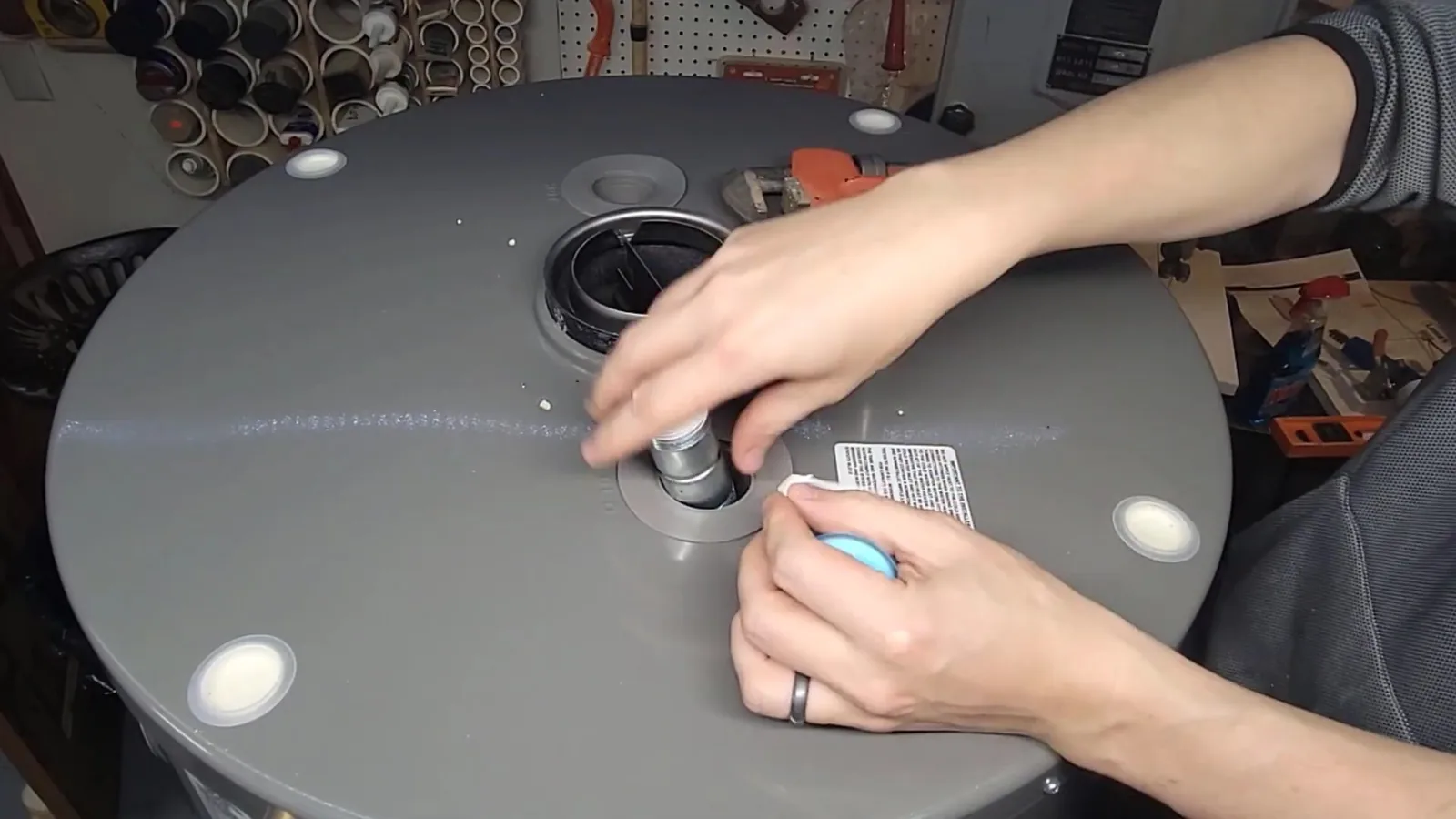
The leak
Where the water is coming from decides the fix
A water heater leak looks the same on the floor whether it comes from a fitting you can tighten or a tank that has rusted through. The source is what matters, so start by finding it.
Close the cold water valve on top of the tank first, and turn off the gas control or the electric breaker if you can reach them safely. Then look at the unit with a flashlight and a dry paper towel.
- Water at the top, around the pipe connections: usually a fitting or a valve, and often repairable.
- Water from the discharge pipe beside the relief valve: the valve may be opening for a reason, such as high pressure or temperature, and a plumber should check.
- Water seeping from the base or the body, or rust streaks down the side: the tank has probably failed.
- Damp at the drain valve near the bottom: a worn valve is a small repair.
A leak from the tank itself cannot be patched, and the right move is replacement. The page on choosing and installing a new unit covers that decision, including the permit rule.
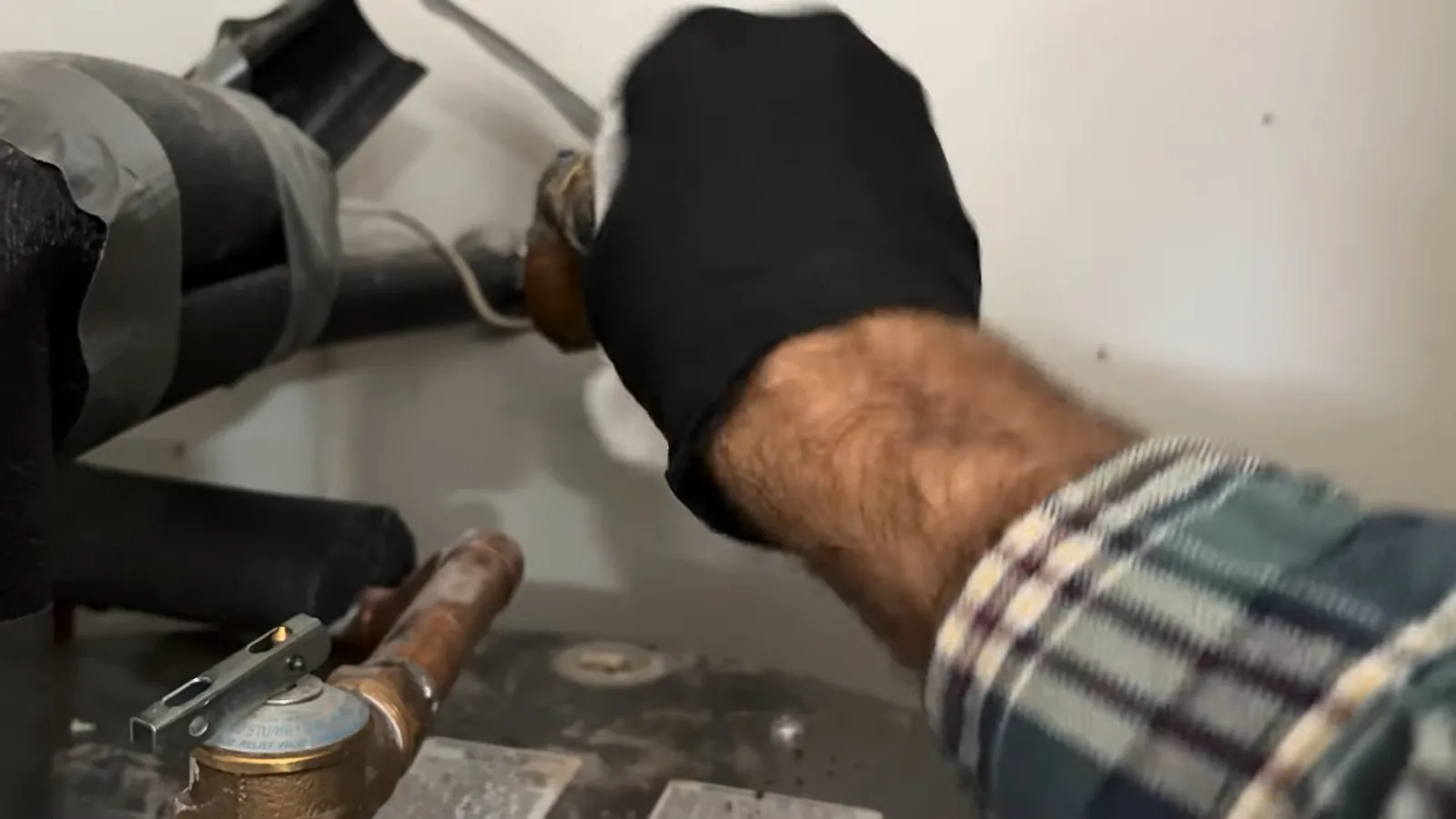
No hot water
No hot water, or not enough: what is usually wrong
The cause depends on the fuel. A short list covers most calls.
On an electric unit, a tripped breaker, a failed heating element or a bad thermostat is the usual explanation. A unit that heats part way, then runs out, often has one element failed of the two.
On a gas unit, a pilot that will not stay lit, a failing thermocouple or a gas control fault is common. If you smell gas, leave the building and call the gas utility or 911 before anything else. Do not relight a unit that smells of gas.
On either type, sediment on the tank floor and a worn dip tube, the pipe that carries cold water to the bottom of the tank, can leave you with lukewarm water that never seems to get fully hot.
Tank leaking from the base? Close the cold water valve on top and call.
CALL NOW(336) 388-6216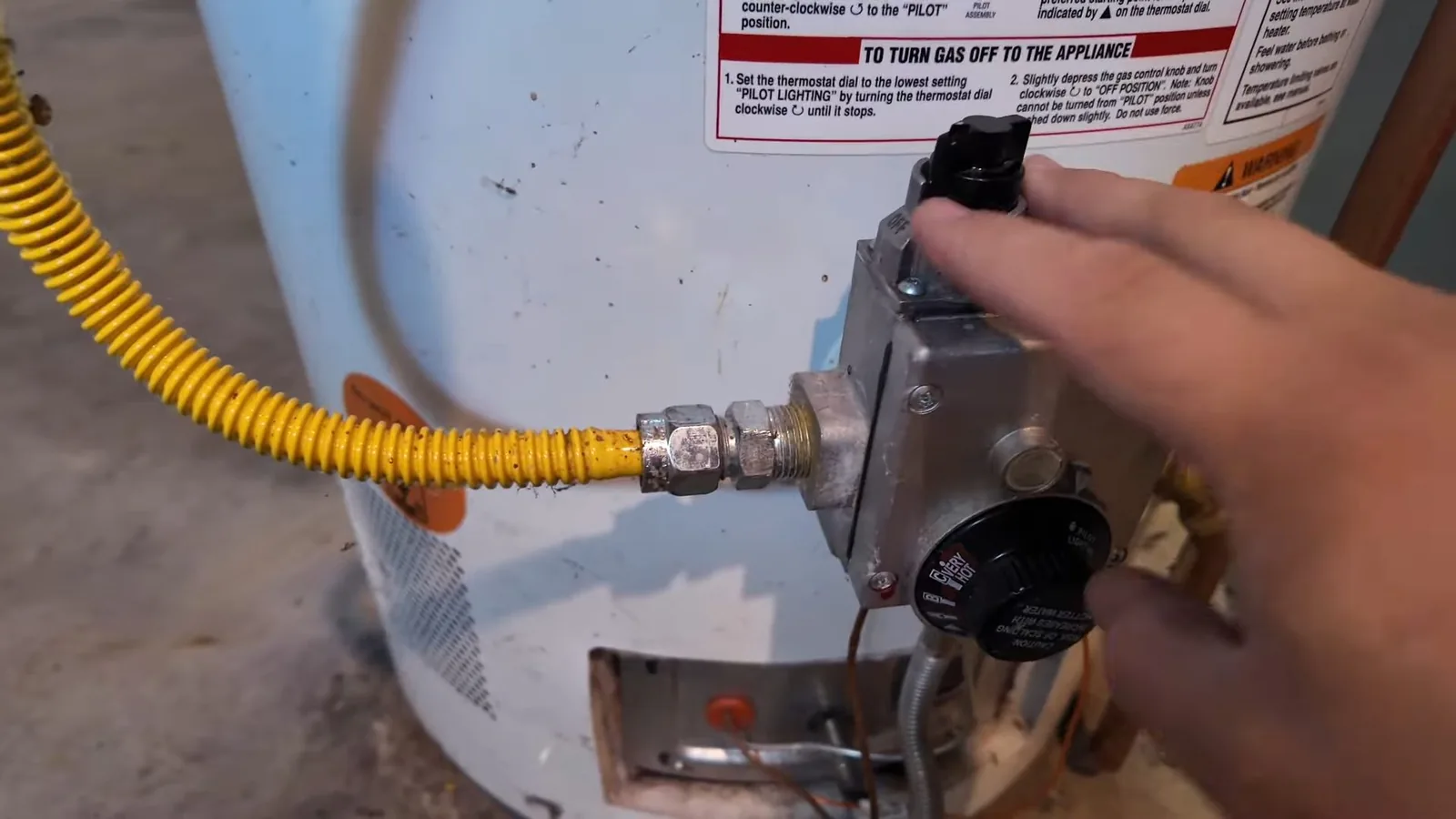
Sounds
A rumble, pop or hiss from the tank
A rumbling or popping sound usually means water trapped under a layer of sediment is boiling as the burner or element heats through it. It is a sign of buildup and a reason to have the unit looked at.
A hiss near the connections can be a small leak turning to steam on a hot fitting. A sizzle underneath the unit may mean water dripping onto a burner or element. Either deserves a prompt look.
Water quality
Is scale really the problem? Ask for the evidence
Scale and sediment are blamed for a lot of heater trouble. The Winston-Salem/Forsyth County Utilities 2025 water quality report lists hardness between 9 and 28 ppm, averaging 17.5, which is low. The report covers the whole system and does not name Clemmons, so it is not proof for any one address.
If a plumber says scale is the cause, ask to see it: a flush that brings out visible sediment, or a deposit on a removed element. Low hardness makes heavy scale less likely, though not impossible in one house.
A water softener is a separate purchase, and nothing on this page suggests you need one.
The decision
Repair it or replace it: how to decide
Ask three questions. How old is the unit? The serial number on the rating plate shows when it was made. What exactly has failed? A thermostat or element is a small part, while a corroded tank is not. And what is the repair price compared with a new unit?
A newer unit with a single failed part is usually worth repairing. An old unit with a leaking tank or repeated faults usually is not.
Ask the plumber to put the diagnosis and the choice in writing, and ask what a new unit would involve. If you replace like-for-like, North Carolina's rule in G.S. 160D-1110(a)(2) exempts the connection from a permit when a licensed plumber does and personally examines the work. A change of fuel, location or capacity changes that.
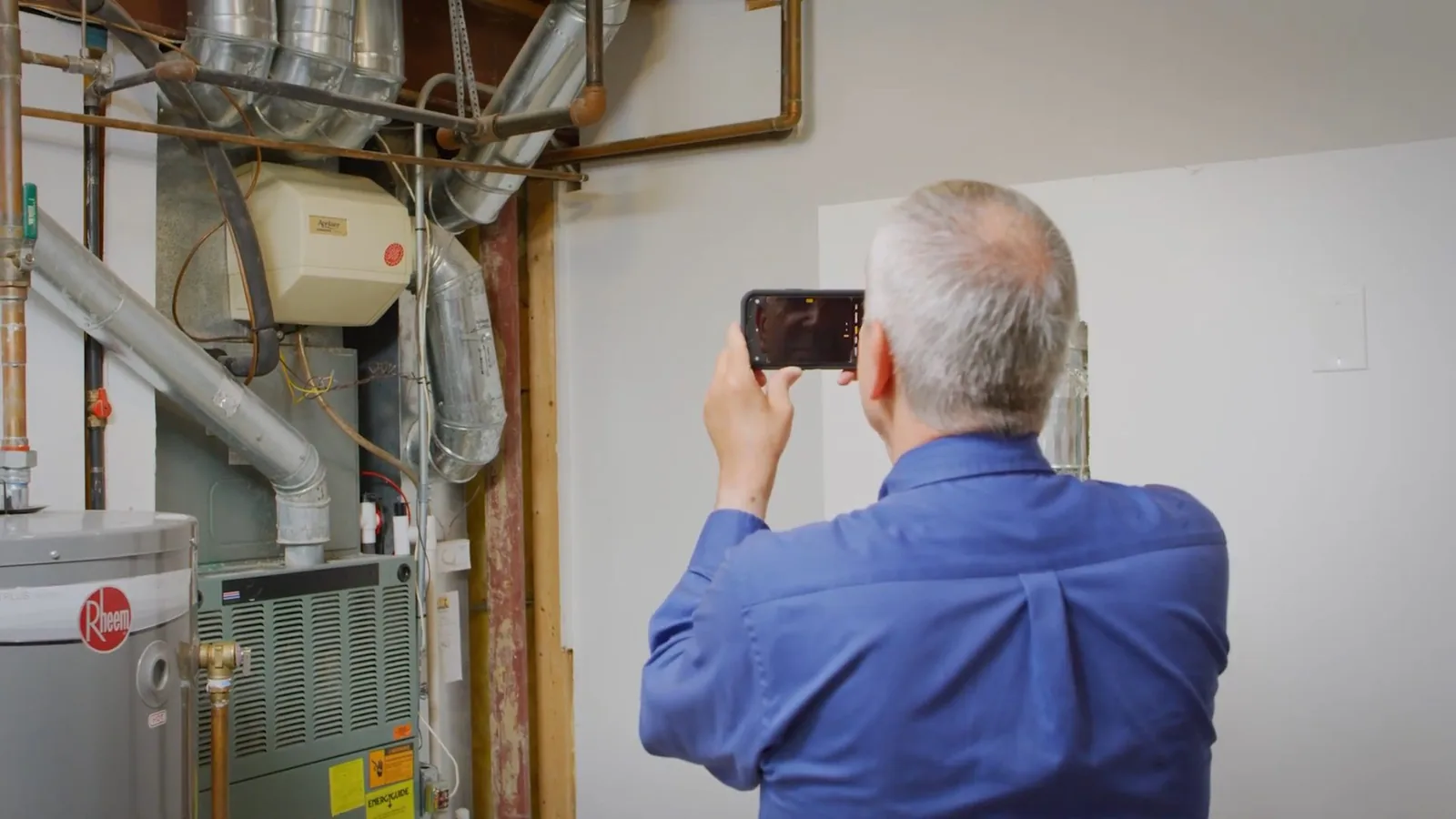
Other types
Tankless and under-sink units are repaired differently
This page covers repair of tank water heaters. Tankless and point-of-use units have their own parts and faults, and they are covered on the page for tankless and under-sink units.
Next step
Calling about a leaking or failing water heater
Tell the dispatcher the fuel, the age if you know it, and where the water is coming from. If the tank is leaking, say so first. The dispatch line routes your call to an independent plumber serving your area. Ask for the price before you agree and what the diagnosis includes. Common price ranges sit on the cost page for water heaters.
Questions
Repair questions before anyone opens the tank
How long does a water heater last?
The U.S. Department of Energy puts the life of a storage tank water heater at 10 to 15 years and a tankless unit at about 20, in its Energy Saver guide on choosing a water heater at energy.gov. Age is only part of the picture. A tank that leaks from the body is finished at any age, and a working unit near the end of that range is worth planning for before it fails.
Why is my water heater leaking?
A leak at a fitting, valve or drain valve is often repairable. A leak from the tank body or base usually means the tank has failed and needs replacing. Close the cold water valve on top and call.
Why do I have no hot water?
On electric units a tripped breaker or failed element is common. On gas units a pilot, thermocouple or gas control fault is common. If you smell gas, leave and call the gas utility.
Is Clemmons water hard, and do I need a softener?
The Winston-Salem/Forsyth County Utilities 2025 report lists hardness of 9 to 28 ppm, averaging 17.5, for its system. It does not name Clemmons. Ask for evidence if scale is blamed.
Browse water heater and other plumbing questions on one page.
Leaking or running cold?
Give the dispatcher the fuel and where the water is coming from, and the call will be routed to a plumber serving Clemmons.
TALK TO A PLUMBER(336) 388-6216