
Whole house repiping, Clemmons NC
Whole House Repiping in Clemmons, NC: When Patching Stops Working
Pinhole leaks in different places, brown water or pressure that keeps falling can mean the pipes themselves are wearing out. This page explains how to tell one bad fitting from a failing run of pipe, what a repipe involves and what to ask before you agree to one.
Signs
Signs the pipes, not one fitting, are the problem
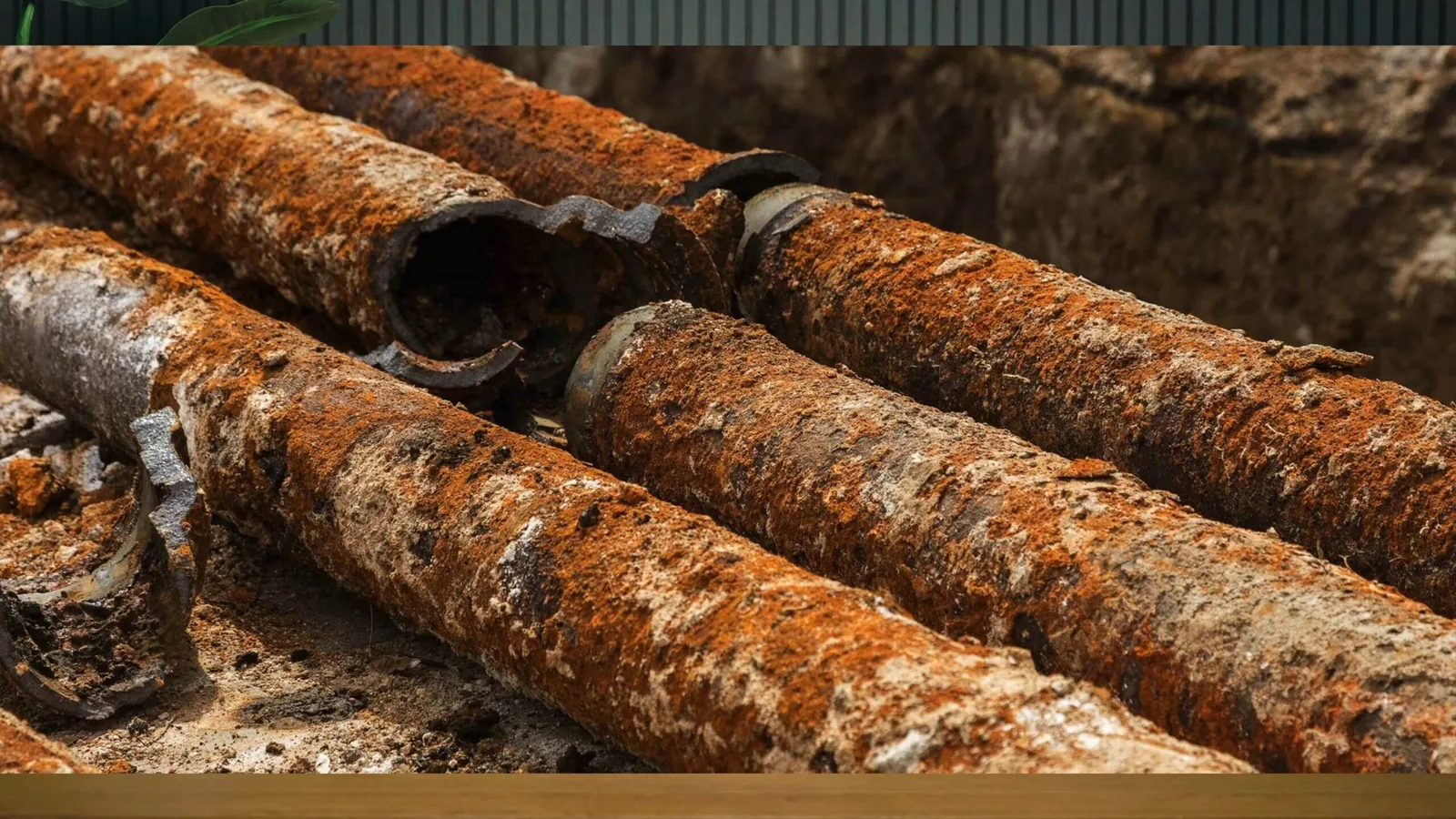
One leak is a repair. A pattern is something else. Pinhole leaks that show up in different places over a few months, water that runs brown or rust-colored after sitting overnight, and pressure that drops at every fixture at once all point at the supply piping rather than at a single fitting.
Look for the evidence a plumber would look for. Crust on copper joints, rust streaks at threaded steel connections, damp spots on a ceiling below a bathroom and a water meter that moves when everything is off all suggest pipe wear or a hidden leak. The hidden leak page shows how to run the meter check before you decide anything.
- Pinholes or leaks in more than one place
- Brown or rust-colored water from several taps
- Low pressure at every fixture, not just one
- Visible corrosion or crust at joints and fittings
- A water bill that climbs with no change in use
Decision
Repair the leak or replace the whole run: how to decide
Patching makes sense when the failure is a single fitting or one damaged section and the rest of the pipe is sound. It stops making sense when each repair is followed by another leak a few feet away, because the new fitting was never the weak point.
Ask the plumber to show you the old pipe: where it has failed, what it looks like inside a cut section and how many other places show the same wear. The answer to how many other places is what decides it.
A leak under a concrete floor is a related but different choice, since running new lines overhead is one of the options on the slab leak page. A pipe that burst in a freeze belongs with burst pipe repair first, and the repiping question comes after.
Leaks in more than one place? Note where each one appeared before you call.
CALL NOW(336) 388-6216Before you call
Ten minutes of checks that help the plumber help you
You do not need tools to gather the facts a plumber will ask about. Write down where each leak appeared and when, and take a photo of any stained ceiling, damp wall or corroded fitting.
Run the cold tap at several fixtures, one after another, and note whether the water is discolored and whether the pressure is low everywhere or at one tap. Find your main shutoff valve and check that you can turn it, because a repipe quote starts with knowing the system can be isolated.
Materials
Older pipe materials worth identifying
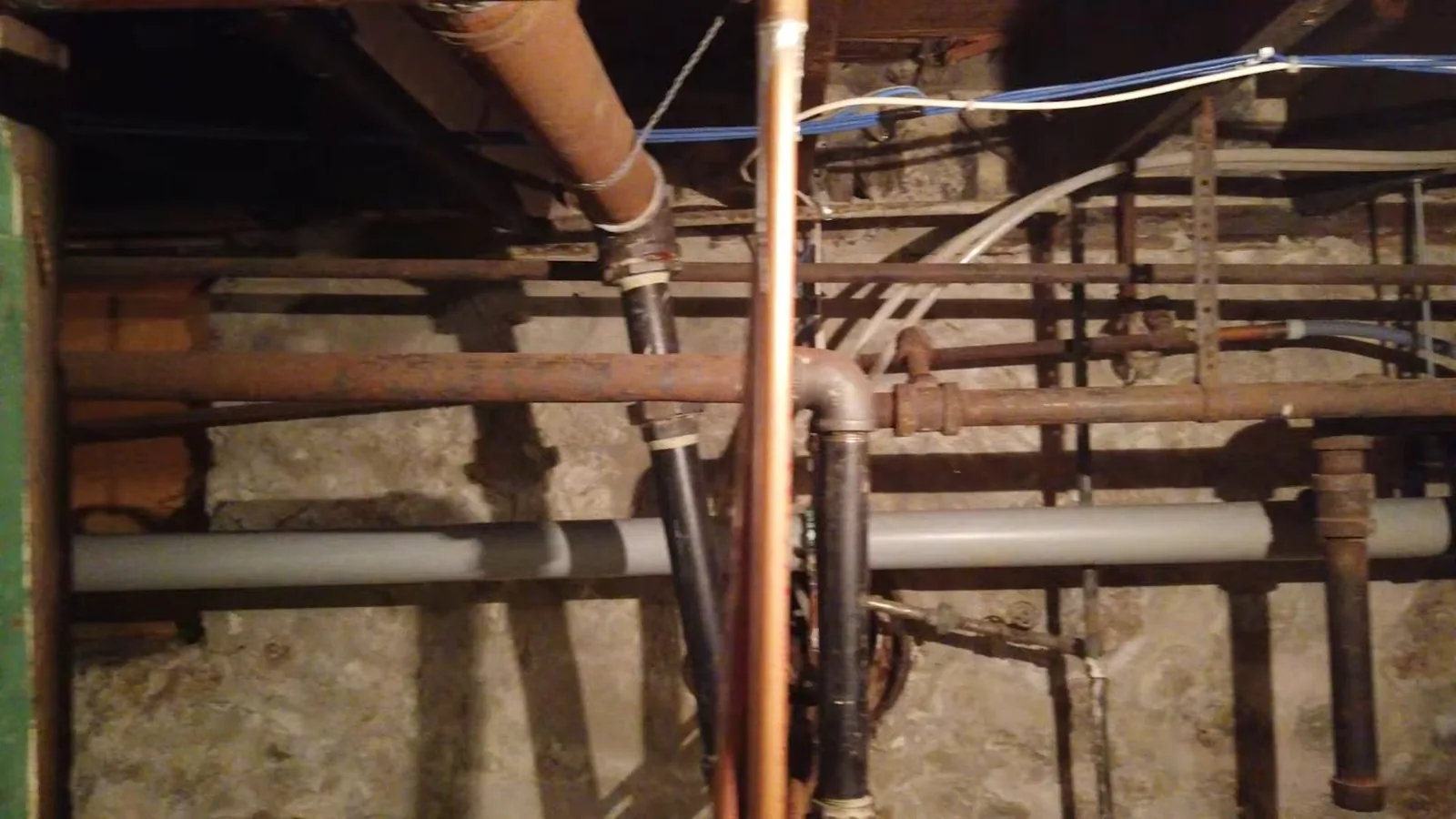
Two older materials come up most often when homeowners ask about repiping. Galvanized steel was common in older houses and was still in use into 1990, according to a plumbing contractor's guide to galvanized pipe, which says it can last anywhere from 20 years to 70 or 80 depending on the water and conditions. Rust-colored water and falling pressure are the usual signs it is closing up inside.
Polybutylene is a plastic pipe, most often gray but sometimes silver, blue, white or black, used mainly in new houses from 1978 to 1995, according to a home-buyer's explainer on polybutylene. That source names chlorine in treated water as the most common cause of failure, which shrinks the pipe's interior and causes small leaks that grow over time. If you are not sure what you have, ask a plumber to identify it and to explain how they did.
You may have neither. A house can have copper, newer plastic or a mix from past repairs, and a mix is worth knowing about, since every joint between materials is a place to check. Much of the piping runs inside walls and under floors, so the identification is only as good as the places the plumber could see.
New pipe
Copper or PEX: what to ask about the new pipe
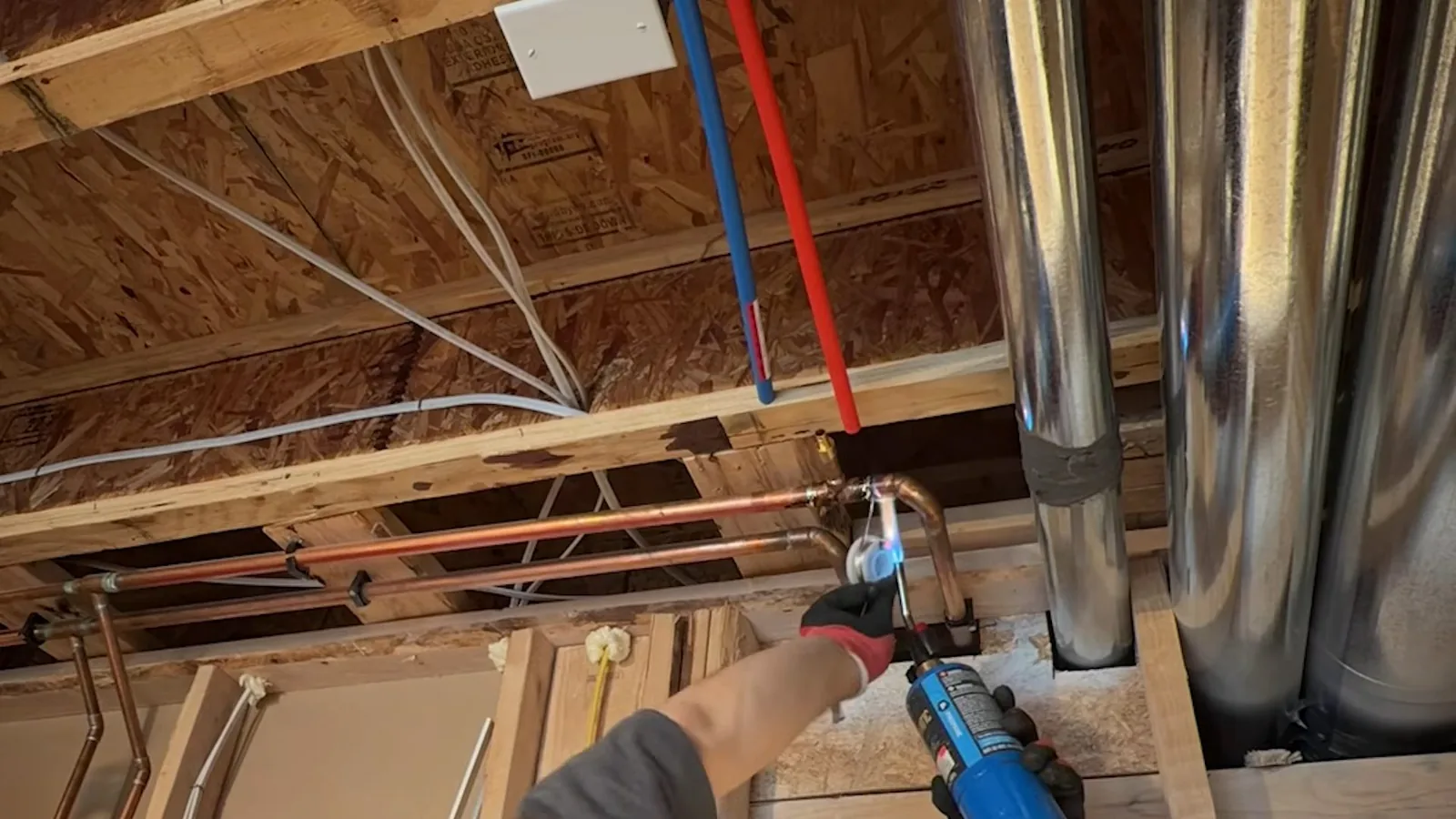
Plumbers commonly repipe with copper or with PEX, a flexible plastic tubing. Each has its advocates, and the right answer depends on your house, the access to the old runs and the plumber's experience with the material.
Ask which material is proposed and why, what size the main lines will be, how the lengths are joined and what the manufacturer's warranty covers. Ask who stands behind the labor if a joint fails, and for how long.
Do not choose on one claim. A plumber who can explain how the new lines will run, where they will stay reachable and how they connect to the water heater and the meter is giving you something to compare.
The work
What a repipe involves inside a lived-in house
A repipe replaces the supply lines that carry water to every fixture, usually the whole network at once. That means the water is off for part of each working day, and walls, ceilings or floors may be opened to reach the old runs.
Ask for the plan before work starts: how many days, which rooms are affected, when the water will be off and how you will have water overnight. Ask who patches the drywall and paints, because that repair is often a separate trade with a separate quote.
- How many days, and when the water is off each day
- Which walls, ceilings or floors will be opened
- Who patches and paints the openings
- How the old pipe is removed and taken away
- What to do if a joint leaks overnight
Rules
Permits, inspections and checking the plumber
Replacing the supply piping in a house is a bigger job than swapping a faucet, and permit rules for it are set by the local inspection office, not by this site. Ask the plumber whether a permit applies to your job, who applies for it and when any inspection happens.
Also ask for the plumber's license details before work begins and confirm them with the State Board. The how to check a plumber's license explains how.
Keep the paperwork: the quote, any permit, the inspection result and the warranty. If you sell the house, those records answer a buyer's questions about the plumbing.
Price
Why repiping quotes vary so widely
Quotes vary because the job depends on things a phone call cannot see: the size of the house, the number of bathrooms and fixtures, the pipe material and how much of the plumbing sits behind finished walls. National cost guides show the same wide spread.
The broad cost ranges for repiping sit on the cost page with the other common jobs. Treat them as a frame for the conversation, not a quote, and ask each plumber to list what is and is not included, such as permits, drywall repair and painting.
A lower quote that leaves out wall repair is not necessarily lower. Compare quotes line by line.
Next step
Calling about a repipe
Tell the dispatcher what led you here: repeated leaks, the color of the water, the pressure and the age and pipe material of the house if you know them. Say whether the house sits on a slab or has a crawl space or basement, since that shapes how new lines can run. The dispatch line routes your call to an independent plumber serving your area, who gives the assessment and the quote.
Questions
Repiping questions
Does one pinhole leak mean the whole house needs repiping?
Not by itself. One leak in one place can be repaired. Repeated pinholes in different places, or pipe that looks badly corroded in a cut section, point to a bigger problem. Ask the plumber to show you the evidence.
Will the water be off the whole time during a repipe?
Usually for part of each working day, not for the entire job. Ask the plumber for a schedule and for how you will have water overnight.
Is rust-colored water always a pipe problem?
No. It can come from your own pipes or from the water supply. If neighbors see it too, call the water utility. If it shows up at several taps in your house and keeps coming back, ask a plumber to check the pipes.
Browse a short list of answers on one page.
Repeated leaks or discolored water?
Tell the dispatcher what you see and what the house is built on, and the call will be routed to a plumber serving Clemmons.
TALK TO A PLUMBER(336) 388-6216